
A marketing masterclass
In this marketing masterclass we will discuss what is a marketing philosophy and what is the role of marketing in contemporary organisations. Although, we will provide an holistic view of marketing – there will be a special emphasis on the services marketing genre.

[click on image above to access this page]
The video below is a 7 minute summary of the ‘Discover’ page
Q: Why are services important?
A1: There are a number of marketing genres – areas of specialisation. Each marketing genre has similarities [e.g., the marketing concept], however, there are differences. Understanding a marketing genre is important during the business-marketing planning process. The most attention is given to the service marketing genre and the reason is quite simple, nothing happens without some sort of service – all products have a service component.
A2: Also the very basis of marketing is that success is due to providing a quality product and that internal service quality is the first step in delivering external quality – therefore, we can conclude that customers can be internal customers and/or external customers.
A3: It is well recognised that the financial objectives of [1] increasing sales revenue, [2] reducing costs as a % of sales, and [3] building the value of the business is dependent on loyal customers providing customer services to the organisation.
The assessment task
To demonstrate that students have studied they should complete the following task.
Complete a 5-8 minute narrated PowerPoint presentation. The title should reflect your approach. Within the presentation should be a brief general description of marketing as a philosophy [approx. 1 minute], An overview of services as a product component [approx 1 minute], the body of the presentation [approx 4 minutes] then complete the presentations with your conclusions.
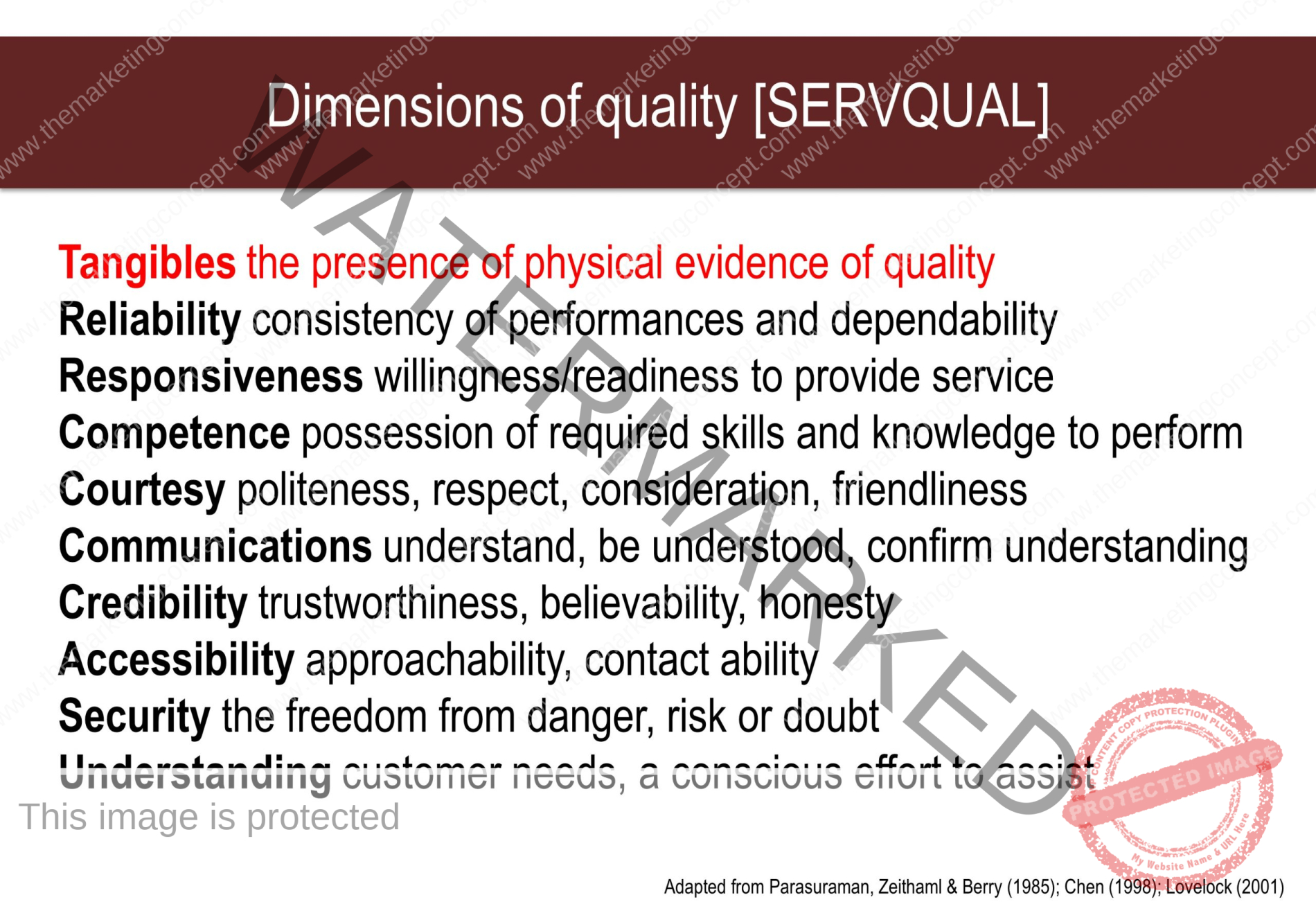
Choose one of the topics: [1] the 5 GAP model of service quality, [2] the challenges of marketing service dominant products, [3] customer perceptions of services, [4] Confirmation/disconformation model & SERVQUAL, [5] customer satisfaction [the circle of satisfaction], and [6] communication strategies and challenges.
Let’s talk about content, context, conclusions, and creativity.
- The content in your words is best to be selected from the e-book and associated material; this is important advice as it will save searching the web for information and demonstrates that you have studied within your lecturers’ briefing. This means avoiding non-academic sources.
- The context is up to each student and may be from an area of your choice [e.g., luxury products, sports products were suggested].
- The conclusions this provides you with an opportunity to discuss what you have discovered undertaking this study and what you wish to share with your listener]. The conclusions allows you to provide an informed opinion; for example, let’s say you chose the 5-Gap mode in your conclusion you may summarise your presentation and state the importance of marketing in a contemporary world [i.e., the 5-Gap model in a digital age] – that is fine.
- Creativity; sure this is about marketing and some creativity is welcome, however, focus on the learning [as this attracts more marks].
WARNING: This is a short presentation so you must set limitations – select a topic, in the first class we provided an overview of marketing [Discover page], then we explored some of the topic the page numbers are provided, however, the table of contents of the e-book will assist, you may also use the search function. If you wish to read the e-book in-depth I would do that later when you have time. You may include any slides that are provided – but explain them.

[click on above to access this page]
In this activity Jacob finds it frustrating when trying to find an organisation with good values. He chats with his uncle and becomes aware that there are 3 broad business concepts.

[click on image above to access this page]
In the activity ‘4 university friends’ we explore how 4 people, who went to university together, catch up and are now employed in different organisations. As we explore their circumstance we can see how they are involved in the strategies and tactics of their respective organisations to different degrees. This is important as they are all involved in the business-marketing planning process in different ways.
MBA students have often said, ‘I am only doing a marketing unit because it is part of my MBA – I will never do any marketing – I will never meet a customer’ – Although a little misguided it is natural for many to have this view, however, as you progress it is likely that a different, more holistic, view will form.

[click on image above to access this page]
In this activity we discuss one of the areas that confuses students – the 4Ps. This idea is often called a theory – but it is not – it is a mnemonic – an aid to memory. The problem is that it was catchy and therefore well adopted, in doing so it detracted students from 2 bigger ideas [1] that it was a summary of Neil Borden’s ‘marketing mix’ and [2] MacCarthy’s conclusion that marketing is about best satisfying – that organisations must satisfy the needs of customers to satisfy their own needs.

[click on image above to access this page]
In this activity we will look at a number of examples and identify the product components – keep in mind we may see things differently.

[click on image above to access this page]
Marketing academics often describe services as intangible, variable, inseparable and perishable. Inseparable suggests that there is often contact between the service provider and the service recipient, however, one of the challenges with service dominant product is that other customers may share the same space. Consider this in light of the gym example in the activity.
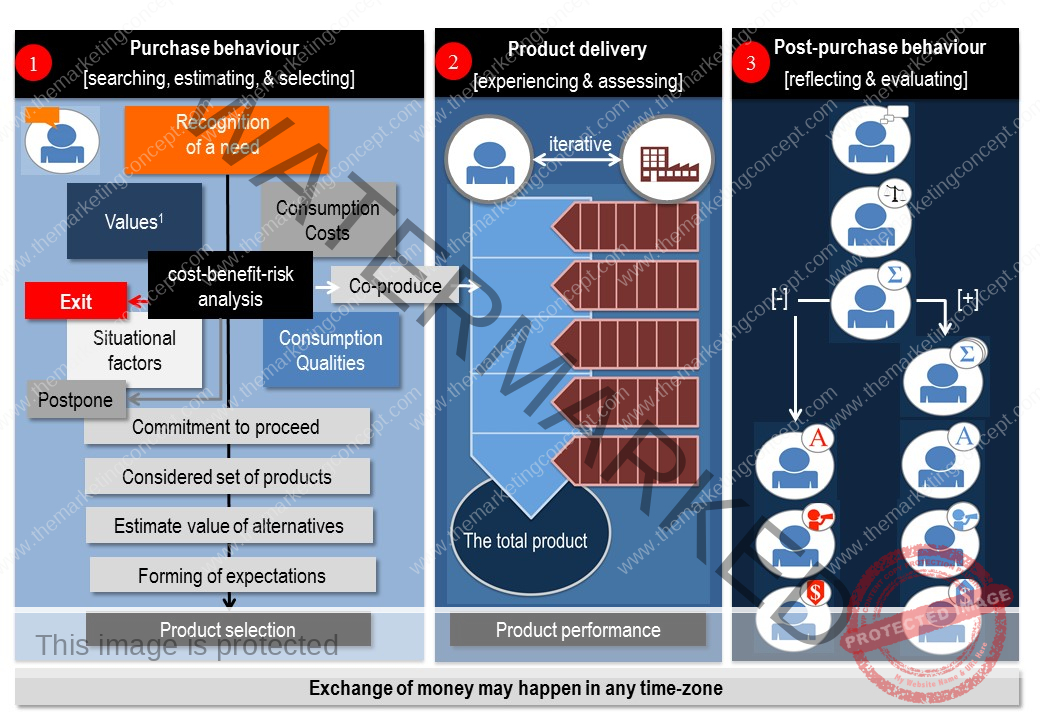


In this activity a fictional character Ted is invited to a cricket match – Australia V India to be held at the Sydney Cricket Ground. He is invited by an old friend and decides he needs an appropriate hat. We change Ted’s situational factors to see how it would change his buying decisions.

[click on link to access this page]
More information on the buyer decision process is available on page 117 of the e-book. Videos are available on this website in the module [click on the link to access]


[Click on the image to access this page]
To access more information on the total product go to page 139 of the e-book. To access the total product via the web-site click on the image above
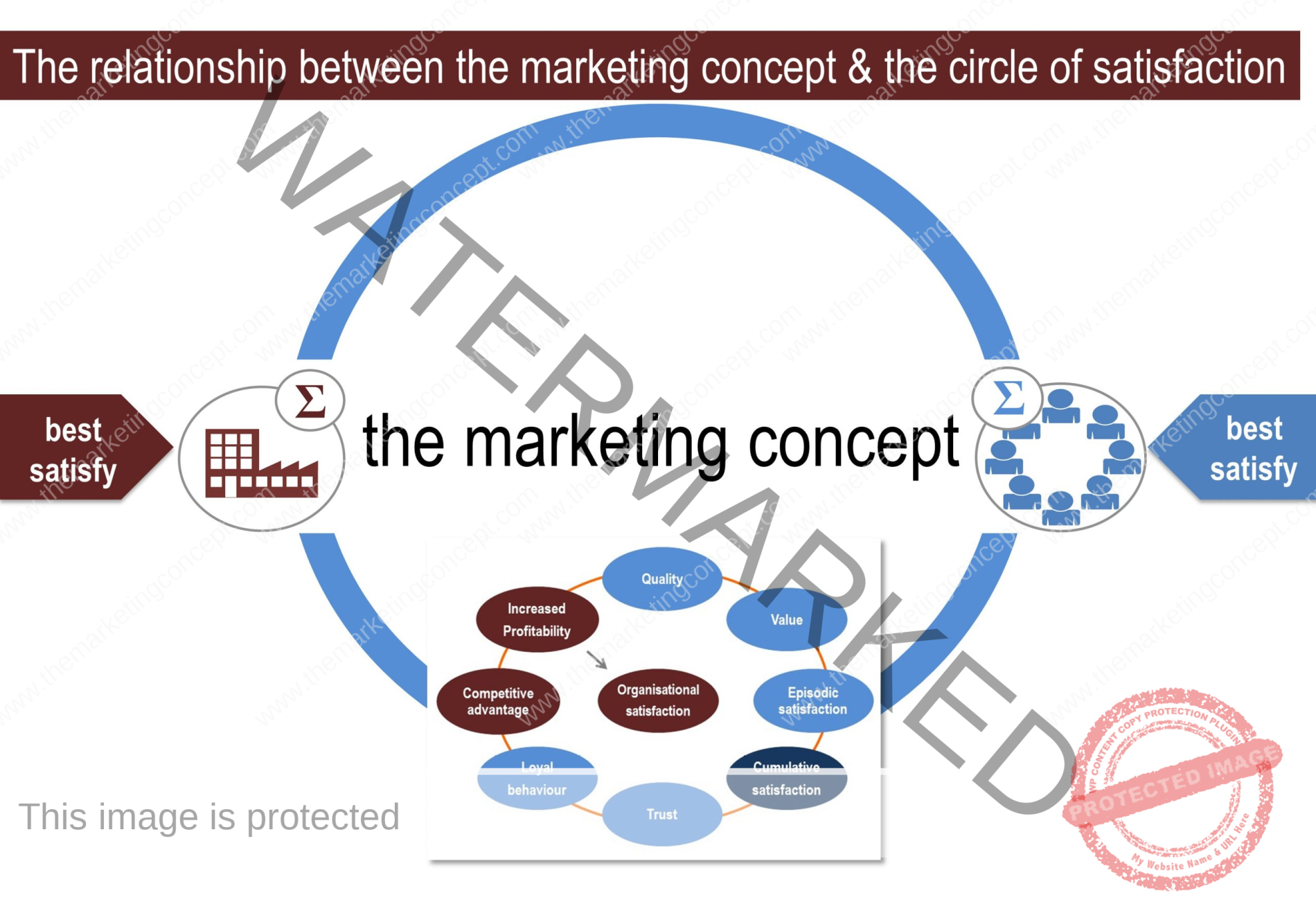
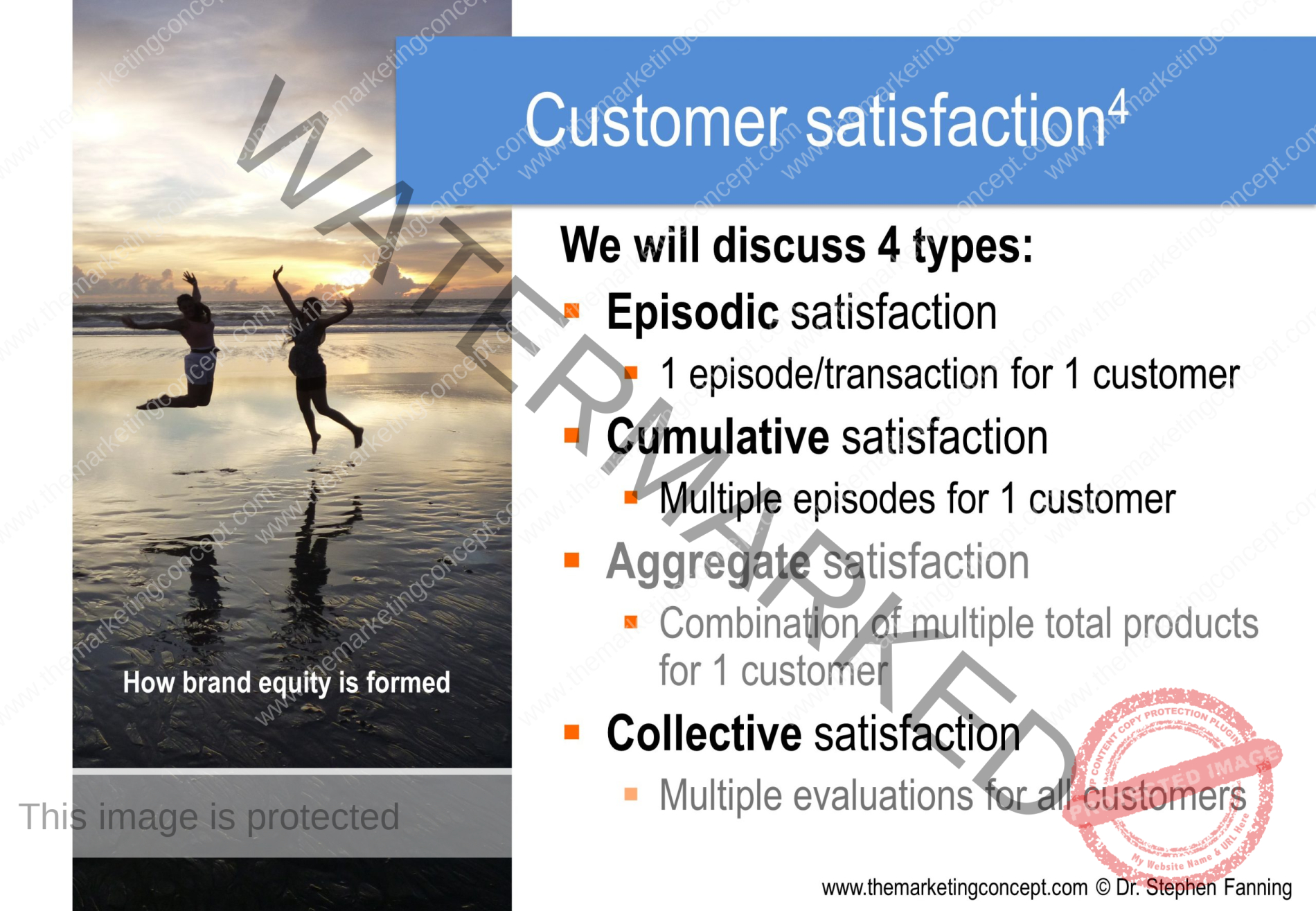
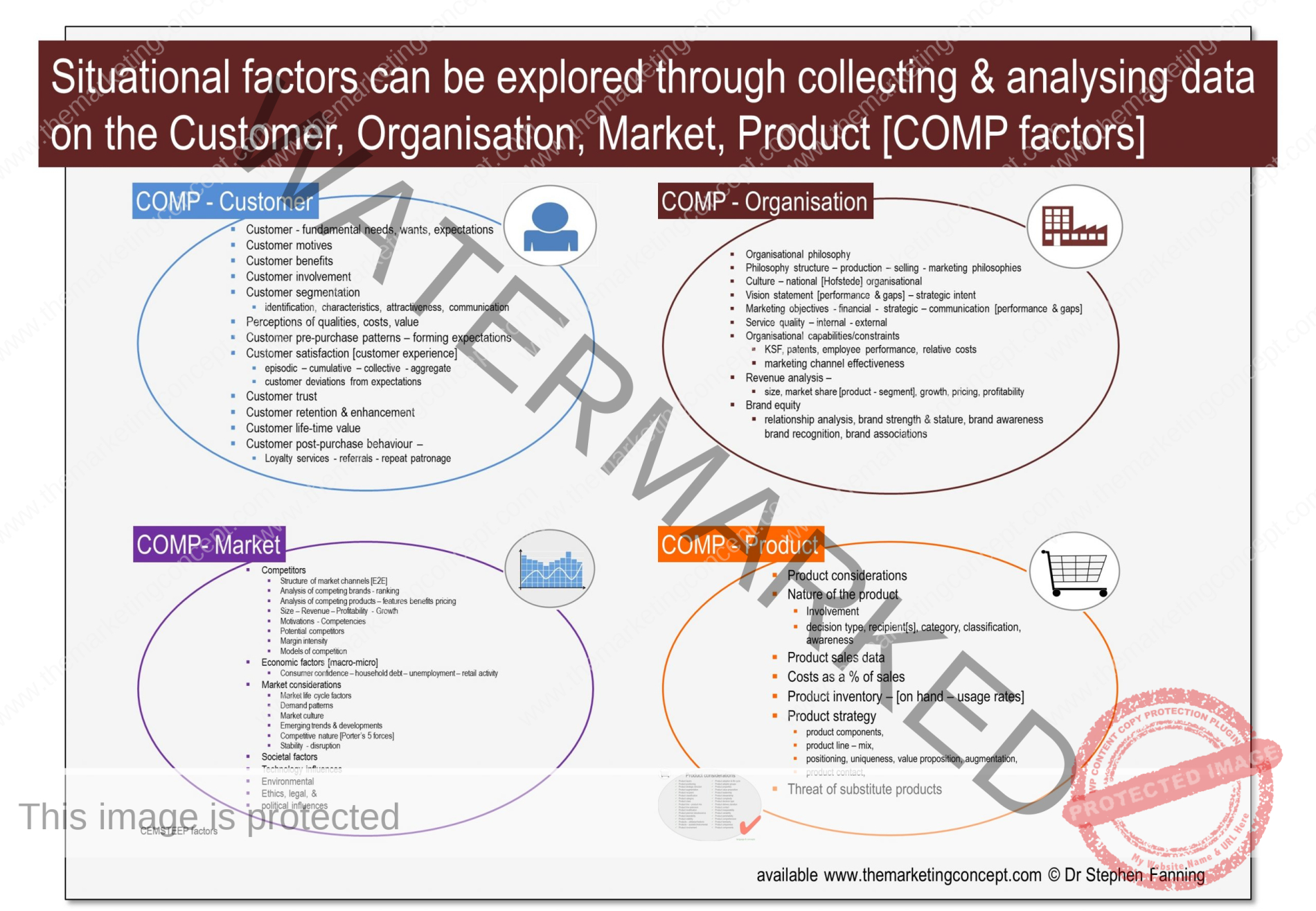

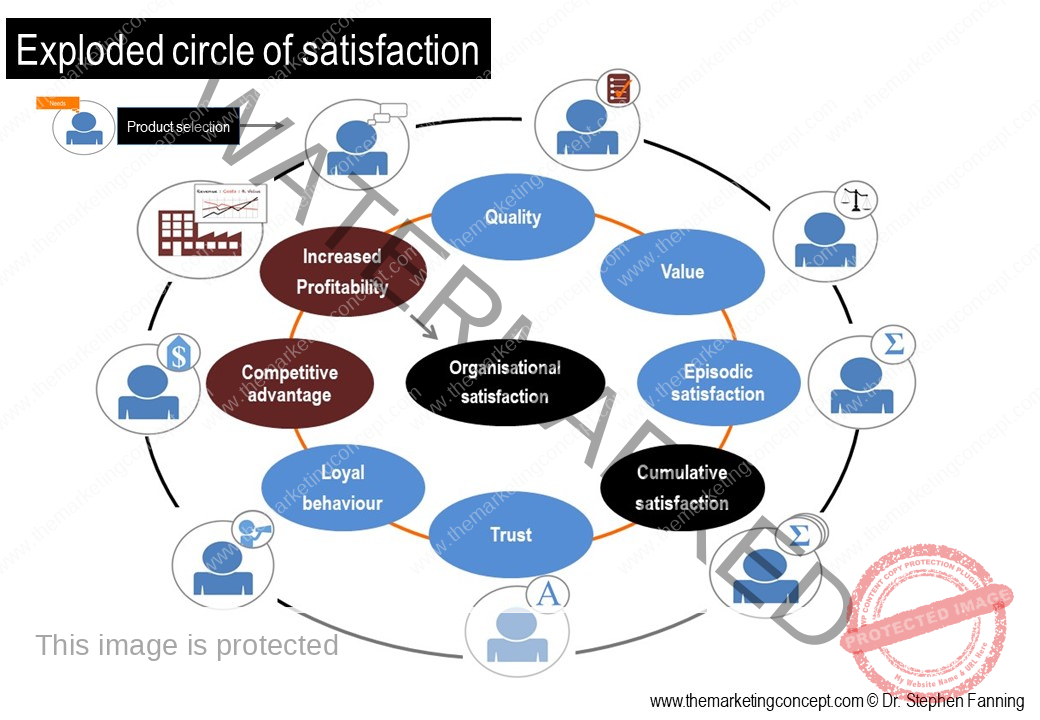
More information on the circle of satisfaction is found on the e-book on page 215 information on the confirmation/disconfirmation model is found on page 222 of the e-book. Videos are available on the web-site and may be accessed by [clicking on the above image].



[click on image above to access this page]
In this exemplar through some towns in the SW of Western Australia we explore how advertising in ‘mainstream media’ is financially prohibitive to small and medium businesses and how they have turned to social media – a number of practices are discussed.



[click on this image to access this page]
Further information on the 5-Gap model and SERVQUAL may be found in the e-book page 291. Videos on the 5-Gap model and SERVQUAL are available in the web-site in the modules chapter managing quality [click on the image above]